
Izzy Bernie
This inaugural edition of The Rye Crop’s monthly STEM lab column highlights some of the exciting experiments taking place in RCDS science classrooms. Each month, the column will offer a closer look at the hands-on activities and investigations that allow students to apply their knowledge beyond the textbook. This October, the spotlight is on experiments in AP Biology with Environmental Data Analysis (EDA) and AP Physics 1.
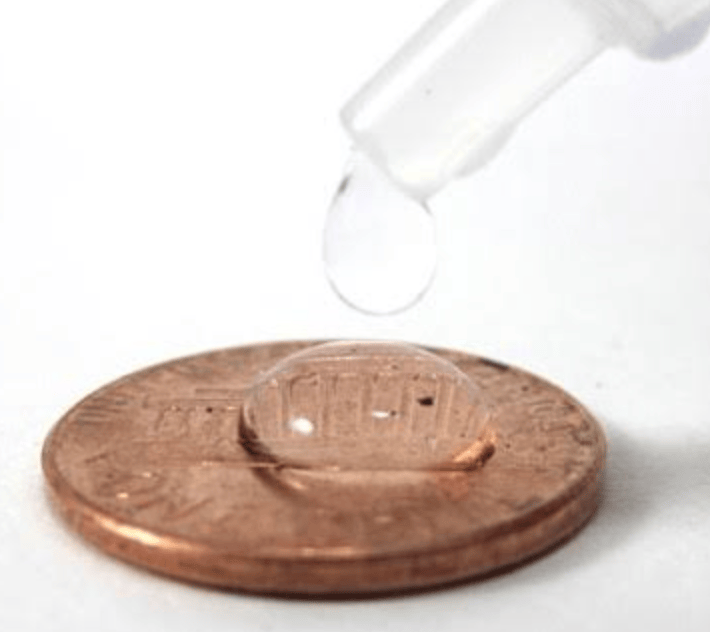
In Upper School Science Teacher Ms. Dooley’s AP Biology with EDA class, students conducted two experiments exploring the properties of water and how it interacts with other substances. In the first experiment, known as the “Drops on a Penny” lab, students tested how many drops of different liquids could fit on the surface of a penny. While water held approximately 40 drops, soapy water held 28, and acetone held just nine. The experiment allowed students to examine how cohesion, polarity, and intermolecular bonds influence the behavior of different liquids.
In another experiment, students investigated how plants transport water by placing white carnations in cups of colored water. Over the course of 72 hours, students photographed their flowers every 24 hours to observe changes in color. As the carnations absorbed the dyed water through their xylem, their petals gradually changed color, demonstrating how water moves throughout the plant.
Meanwhile, in Upper School Science Teacher Dr. Bove and Upper School Science Teacher Dr. Krasovec’s AP Physics 1 classes, students took on the “Hit the Can” lab, which challenged them to apply their understanding of projectile motion and vectors. Using a ball launcher, students calculated the angle and distance needed to successfully launch a ball into a can. The experiment required students to use the range equation and trigonometric functions to determine the appropriate launch angle.
AP Physics 1 student Jack Moss ‘28 described the experiment as an engaging way to “encourage critical thinking about vectors.” Rather than simply solving equations on paper, students were able to see how their calculations translated into real-world results.
Through these experiments, students across both science classes were able to apply concepts learned in class to hands-on challenges, reinforcing their learning in an engaging way.

