
Written By Molly Hart
Why does Latine Heritage Month start on September 15 instead of on the first of the month? The beginning of the month-long celebration correlates with the liberation of several Latin-American countries: Costa Rica, El Salvador, Guatemala, Honduras, and Nicaragua, with Mexico, Chile, and Belize gaining theirs just the day after on the 16th.
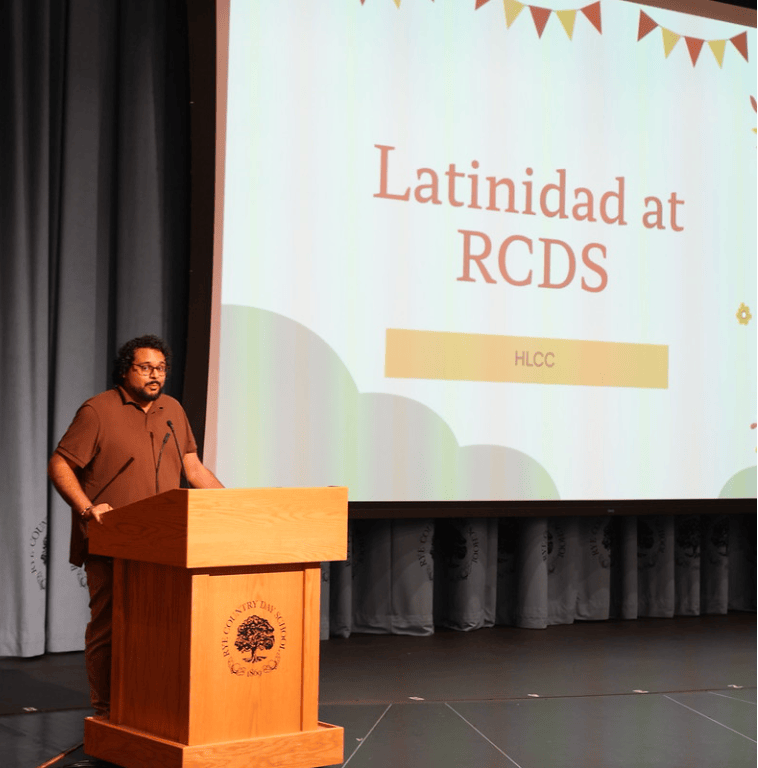
Similarly to the Gender and Sexuality Alliance (GSA) and Pride Month, or HARAYA and Black History Month, the Hispanic Latine Culture Club, or HLCC, spends the September/October period planning activities for the Upper School to accentuate and celebrate Latine people. Club President Camila Reyna ‘27 and former club advisor Mr. Rivera, the Interim Director of DEI, shared the club’s ideas for this month, where HLCC is looking to “host a Community Forum, design a bulletin board, create an activity during advisory, and more!” Mr. Villalta, a graduate of the class of ‘21, is this year’s advisor for the HLCC. He is a new hire at RCDS, specifically as a teaching fellow in the Math Department.
Celebrating Latine Heritage Month is incredibly significant to numerous members of the RCDS community, including Rivera. When asked what Latine Heritage Month means to him, Rivera eloquently responded. “To me, Latine Heritage Month is about putting culture out on display and highlighting people and things that make Latine culture special, like the food and the music.” There are also more personal aspects for him, such as “having a cafecito in the kitchen with my mom and grandma, or talking about important people such as Roberta Clemente and Dolores Huelta.” Rivera noted that one of his favorite parts, though, is the idea of people coming together as a community.
Once Latine Heritage Month comes to a close, what is the HLCC up to? Omaya Garay ‘29, a member of the club, listed numerous ventures. In club meetings, they discuss “other Latine celebrations later in the year, like Carnaval, as well as Latine culture as a whole and the different diasporas within it.” Garay also mentioned the club’s emphasis on the importance of embracing your culture and being educated on it, and learning about other cultures. An important example she gave about HLCC’s education efforts is the discussion of different dialects and slang words from different Spanish speaking countries, and how there are different ways to articulate the exact same idea.
In RCDS, Garay noted that the Latine population being smaller than her old school’s leads to a stronger connection. Everyone is able to share something unique, whether about their culture or their experiences. “Being Peruvian but previously never really being able to interact with others who have a similar background to me,” she stated, “I always get really excited when I meet another Peruvian person.”
Garay discussed her pride in her culture, and when asked to elaborate on what makes her proud to be Latine, she responded, “The diversity of the culture. If you go to Latin America, you will always be able to learn about or try something new, whether it be a culture, ideas, or the food.” Despite the many differences, both she and Rivera noted that it’s easy to connect with others no matter their specific diaspora. Even countries that don’t speak Spanish but are in South America – Equatorial Guinea, Brazil, and Benin – have numerous similarities to their Spanish-speaking neighbors that allow for that sense of community.
Be sure to keep an eye out for the various Latine Heritage Month activities coming up!

