
Written By: Mia Herz and Sophia Shen
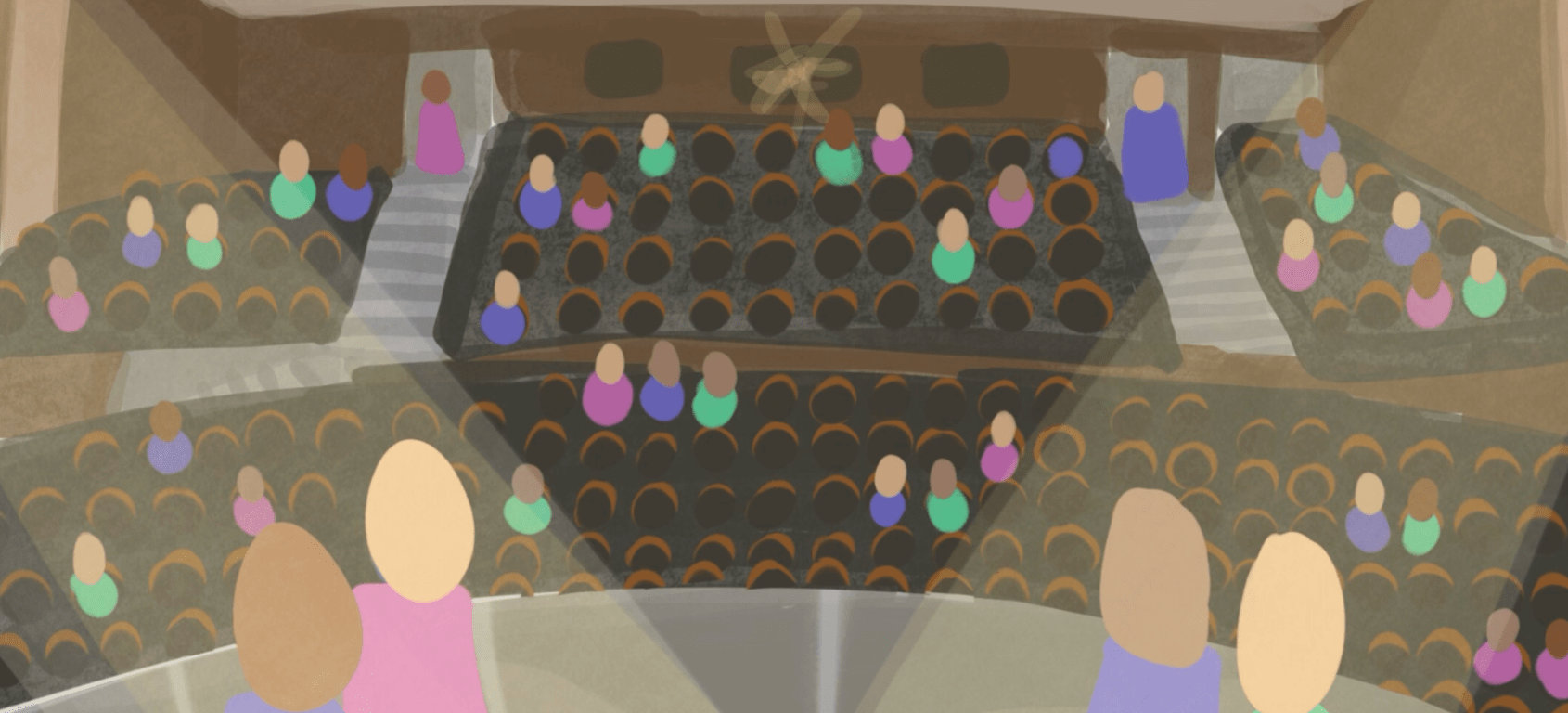
Rye Country Day School recently held a community assembly focused on dialogue, aiming to prepare students for respectful and thoughtful conversations ahead of the presidential election just four days later. Despite the importance of the topic, a significant number of students chose not to attend, raising the question: why are RCDS students skipping assemblies?
The gathering was intended to unite the student community through a critical lens of this year’s theme: connection. Jenny Heath, RCDS Upper School Assistant Principal shared a key purpose of these assemblies, explaining how they allow “our community to come together for shared experiences.” RCDS often hosts speakers or performances for the students and faculty to enjoy and learn from. Ms. Heath said that these assemblies are important because they offer a “spirit element [and] educational component,” as “there are so many things [students] learn in their educational journey that happen outside of the classroom.”
Andres Cerpa, 11th Grade Dean and Upper School English teacher also explained that “students are often in different classrooms having different experiences throughout the day, and coming together at assemblies creates a unified experience.” In addition, there are several students who appreciate community gatherings. Emily Cheigh ‘25, Student Body President acknowledges and values the importance of meetings like the dialogue assembly, as the school “makes a large effort to give [students] education in ways that aren’t pure academic content or grades,” and the school’s effort “can be mistaken as boring events.”
Students report that they tend to avoid meetings because of their intense workload. Mr. Cerpa recognized that “because students are ambitious and care about their classes, they sometimes focus on their academic life, more than the [enrichment opportunities] outside of academics.” Similarly, Ms. Heath acknowledges that students tend to prioritize schoolwork, as it is more often “of immediate importance, such as a deadline or a test” rather than something they can “apply later on down the road.”
Jacob Fisch ‘27 said that “the topics presented seem irrelevant and less important than [his] intense workload.” Many students, such as Darren Wong ‘26, Junior Class Senator, also agreed that many of the topics during meetings are deemed as boring, repetitive, and stated that the information presented is “common sense.” He acknowledged that some speakers visit RCDS annually and often repeat their presentations from previous years, making these assemblies feel redundant for upperclassmen who have already heard the same content three or four times.
To increase student engagement, it might be valuable to receive students’ input on the speakers and topics during these assemblies. By allowing students to vote for and elect the topics presented during assemblies, the school could increase student interest and make their opinion feel more valued in the RCDS community. On the other hand, Cheigh acknowledges that the problem stems from the ongoing “school culture of leaving school and dismissing anything that doesn’t come with a grade” rather than the topics of community assemblies themselves.
The timing of these assemblies is also worth considering. Students are frustrated by the frequent special schedules, as they disrupt class time and teacher meetings. While Upper School teacher Dr. Krasovec acknowledges the importance of community meetings; she felt community assemblies would benefit students and teachers alike if they were “more built into the regular schedule.” Special schedules also occur extremely often, which make it very disruptive for students and teachers to maintain a routine. In the past three weeks alone, the school has had five special schedules. During one week, classes scheduled in blocks E, F, G, and H met only once the entire week for fifty-five minutes. Normally, these classes meet two to three times per week, for one hour each.
To encourage more student engagement, RCDS staff has recommended taking more meticulous attendance to ensure students are participating in meetings. Although this might be effective, students feel untrusted, damaging the student-faculty relationship and trust. Over half of the students and teachers who we approached to interview either did not attend the meeting, or were reluctant or unwilling to speak about it. This highlighted the growing tension surrounding this issue and the amount of people that did not attend the meeting.
 RYE CROP