
Author B–
Until recently, Rye Country Day School (RCDS) students had not been paying much attention to the developments in the world of artificial intelligence that many thought would soon be groundbreaking in the role of education. RCDS students are required to take computer science courses and their value is clear; however most students did not feel as though they could continue on in their academic careers without having to think too deeply about artificial intelligence and how it might impact the day-to-day experience of high school. With the introduction of chatbots that are sure to revolutionize essay writing and the way that students and teachers approach schoolwork in general, though, students have no choice but to pay attention.
ChatGPT took the world by storm when it became available to the public in December 2022. Through the use of artificial intelligence, the website is able to create detailed responses to prompts using information available online that can easily pass for student crafted pieces of writing. The program’s written response can be improved on or tailored by further student input, too, which allows for more specific responses to meet a student’s need. Now, teachers and students alike are asking themselves how this will affect the future of education, particularly in classes and institutions where writing is a core focus.
“I have mixed feelings,” says an anonymous 12th grader at Rye Country Day. “On the one hand academic integrity is emphasized so heavily in everything we do here but at the same time having these resources available to us that can craft unique responses, help us answer questions, and even identify themes, well, it will be a game changer.”
Much of the writing assignments at RCDS, particularly following the introduction of the school’s Honors English Seminar in the fall semester of 2021 encourage students to think deeply about the books that they are reading and seek connections that may be beyond central themes that AI would be able to easily identify. In Honors level English courses students are encouraged to identify a tension in texts and track how that tension develops and changes throughout that text. Complex writing stems from questions and at this point, the AI programs are not capable of utilizing higher order thinking to create wildly complex written responses.
“I have a feeling we may have more handwritten writing in our future,” says another anonymous RCDS student. “If teachers can make sure that students’ work is their own they will want to do that and with this new technology there is no real guarantee unless it is written with pen and paper.”
As RCDS takes on this new wave of modern technology, adjustments to the way students learn and the way teachers teach and how both prepare for classes will arise. Assuming that members of the community continue to value the school’s purpose for education, the changes made should not be detrimental to the learning process and could even prove to be innovative.
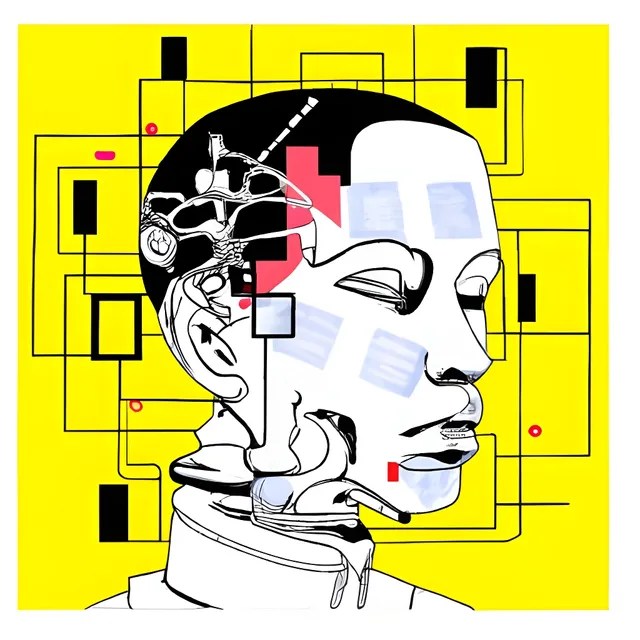
This article was written by Isabel Slippen. Image created by ChatGPT. For the full answer key, click here.
 RYE CROP